European Bond markets: five musings from July

Aug 01, 2025

Neil Mehta, Portfolio Manager, provides small pieces that make up the big picture in European macro and fixed income markets.

1. The EU was right to accept Trump’s trade deal

Zoom in: the EU accepted a 15% tariff on imports (plus some investment intention) in exchange for zero tariffs on exports to the US.

What they're saying: leading economists, including Olivier Blanchard, have criticised the agreement, stating ‘asymmetric 15% tariffs represent a defeat for the EU.’ French Prime Minister François Bayrou voiced similar concerns, echoing widespread discontent among a certain sect of European leaders.

Reality check: Europe approached the negotiations from a position of weakness, constrained by vulnerabilities in key sectors such as automotive manufacturing and security.

What’s next: with the deal concluded, Europe can now turn its attention to broader priorities. The European Central Bank (ECB) has normalised interest rates, Germany is preparing to inject €1 trillion into its economy, and the manufacturing sector is gaining some momentum (Purchasing Managers’ Index is now ~50).

Bottom line: this deal is less about triumph or failure and more about moving forward.

HCOB Eurozone manufacturing Purchasing Managers’ Index
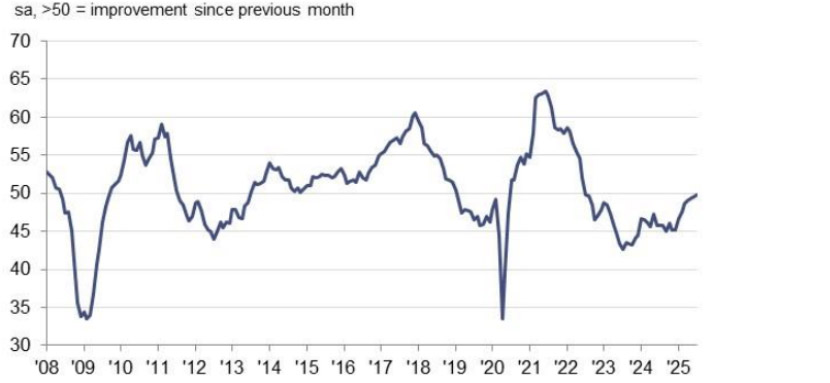
HCOB Eurozone manufacturing PMI chart

Source: S&P Global, as at 2025. Sa = seasonal adjustment.

2. Schnabel was the signal for what markets interpreted as a ‘hawkish’ ECB meeting in July

Zoom out: in an early July interview, ECB Council member Isabel Schnabel stated that the bar for another rate cut is ‘very high’, noting that risks to the euro area’s growth outlook have become more balanced.

Zoom in: President Christine Lagarde reinforced this view, adding that the ECB would not be swayed by minor deviations in inflation or growth, and policy is set with an eye on the medium term.

Between the lines: the ECB believes it has struck the right balance, with monetary policy neither overly restrictive nor overly accommodative. Any adjustments now, they suggest, would be driven primarily by risk management considerations.

What’s next: it would take a significant supply-side shock to push inflation into reverse. While Lagarde has not ruled out a shift towards considering rate hikes, the bias remains towards easing further.

Implications: as rate cuts get pushed further out, the odds of the next cut being in 2026 as opposed to this year grow.

3. Long-end European rates haven’t come to terms with the fundamental and technical forces shaping the market

Reality check: Dutch pension fund reforms will reduce demand for long-term sovereign bonds, with funds shifting to higher return assets like equities and credit.

By the numbers: the FT reported Dutch pension funds plan to sell €125 billion in long-dated bonds this year due to retirement sector reforms. ING estimates a €500 million dollar duration impact from Dutch pension reform unwinding interest rate hedges.

Why it matters: increased issuance, reduced ECB support, and structural shifts in demand could destabilise long-end bond markets.

The bottom line: Barclays projects €1.5 trillion in gross European sovereign bond issuance by 20261; long-end European rates face mounting pressure from both fundamental and technical factors, requiring careful monitoring.

30-year bund yields
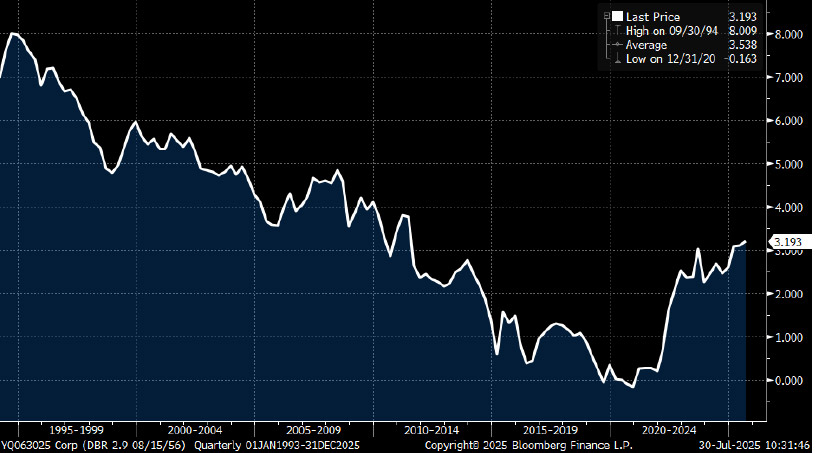
30-year bund yields chart

Source: Bloomberg, as at July 2025.

4. Credit risk in the European sovereign space is on a tear with spreads at fresh YTD tights

Where we stand: geopolitical uncertainty and shifts in global trade rules have further strengthened European institutions. Initiatives like the Strategic Autonomy and Defence of Europe (SAFE) programme are driving deeper integration, while the ECB continues to provide monetary support.

The big picture: the Sentix Euro Break-up Index, which measures the probability of a euro area country exiting the euro within 12 months, is at historic lows.

Between the lines: ample liquidity in the market is fuelling investor activity. Capital is being shifted and repatriated, with European fixed income emerging as a key beneficiary.

Why it matters: tighter spreads signal confidence in European cohesion, but investors must remain vigilant in a fragile global environment.

Implications: history has taught us that a decline in scepticism, a dearth of risk aversion and the generally positive mood calls for prudence as markets can shift unexpectedly.

Sentix Euro Break-up Index
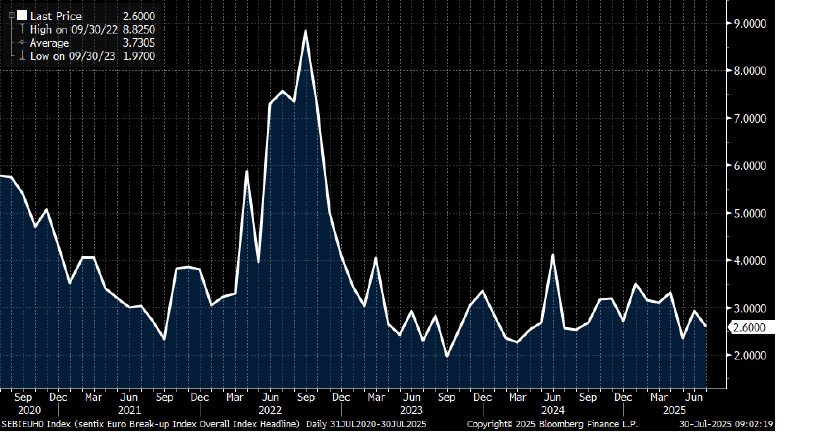
Sentix Euro Break-up Index chart

Source: Sentix, Bloomberg, as at July 2025.

5. The UK’s fiscal challenges extend far beyond the immediate question of how to raise taxes at the next Budget

Context: a report from the Office for Budget Responsibility (OBR) has laid bare the harsh realities of spiralling debt and persistent mismanagement of public finances.

Zoom in: the report identifies three major long-term fiscal risks: an ageing population, rising pension costs, and the financial demands of climate change.

By the numbers: national debt is projected to soar to 270% of GDP by 2070, far exceeding sustainable levels, if current trends go unchecked. Markets have latched on, with UK 10-year gilt yields the highest in the G7.

Reality check: the Government’s abandonment of planned spending cuts is another example of short-termism in the political arena.

Between the lines: the UK is paying the price for poor inflation control, excessive borrowing, and unsustainable spending under successive governments.

The bottom line: without urgent reforms to address long-term fiscal risks, the UK’s debt trajectory and economic resilience remain on shaky ground.

Public Sector Net Debt (PSND) forecast versus outcome since 2010
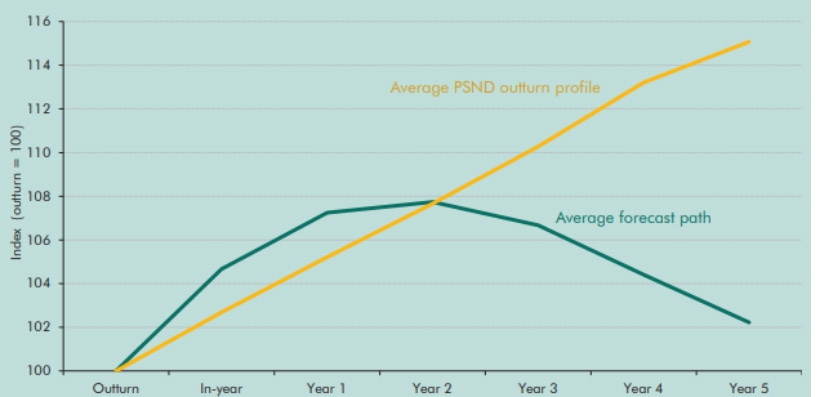
Public Sector Net Debt (PSND) forecast versus outcome since 2010 chart

Source: OBR, as at 2025


All data sourced from Bloomberg, as at July 2025, unless otherwise stated.
1 Barclays Research, July 2025.

Iscriviti per ricevere gli approfondimenti via mail

Iscriviti ora per ricevere gli ultimi approfondimenti economici e sugli investimenti dei nostri esperti, inviati direttamente alla tua casella di posta elettronica.

Il presente documento costituisce una comunicazione di marketing e può essere prodotto e distribuito dai soggetti di seguito specificati. Nello Spazio Economico Europeo (SEE) il soggetto autorizzato è BlueBay Funds Management Company S.A. (BBFM S.A.), che è regolamentata dalla Commission de Surveillance du Secteur Financier (CSSF). In Germania, Italia, Spagna e Paesi Bassi, BFM S.A. opera con un passaporto di filiale ai sensi della Direttiva sugli Organismi di investimento collettivo in valori mobiliari (2009/65/CE) e della Direttiva sui Gestori di Fondi di investimento alternativo (2011/61/UE). Nel Regno Unito, la produzione e distribuzione sono curate da RBC Global Asset Management (UK) Limited (RBC GAM UK), che è autorizzata e regolamentata dall’Autorità di vigilanza finanziaria del Regno Unito (FCA), registrata presso la Securities and Exchange Commission (SEC) statunitense e membro della National Futures Association (NFA) su autorizzazione della Commodity Futures Trading Commission (CFTC) statunitense. In Svizzera, la produzione e distribuzione sono curate da BlueBay Asset Management AG il cui Rappresentante e agente per i pagamenti è BNP Paribas Securities Services, Paris, succursale de Zurich, Selnaustrasse 16, 8002 Zurigo (Svizzera). Il luogo di adempimento è stabilito presso la sede legale del Rappresentante. I tribunali della sede legale del rappresentante svizzero o della sede legale o del luogo di residenza dell’investitore sono competenti per i reclami relativi all’offerta e/o alla pubblicità di azioni in Svizzera. Il Prospetto, i Documenti contenenti le informazioni chiave per gli investitori (KIID), i Documenti contenenti le informazioni chiave dei Prodotti d’investimento al dettaglio e assicurativi preassemblati (KID dei PRIIP), ove applicabili, lo Statuto e qualsiasi altro documento richiesto, come le Relazioni annuali e infrannuali, si possono ottenere gratuitamente dal Rappresentante in Svizzera. In Giappone, la produzione e distribuzione sono curate da BlueBay Asset Management International Limited, che è registrata presso il Kanto Local Finance Bureau del Ministero delle Finanze giapponese. In Asia, la produzione e distribuzione sono curate da RBC Global Asset Management (Asia) Limited, società registrata presso la Securities and Futures Commission (SFC) di Hong Kong. In Australia, RBC GAM UK è esente dall’obbligo di possedere una licenza australiana di servizi finanziari ai sensi del Corporations Act per quanto riguarda i servizi finanziari, in quanto è regolata dalla FCA secondo le leggi del Regno Unito che differiscono dalle leggi australiane. In Canada, da RBC Global Asset Management Inc. (che include PH&N Institutional), che è regolamentata dalle commissioni titoli provinciali e territoriali presso la quale è registrata. RBC GAM UK non è registrata ai sensi delle leggi sui valori mobiliari e si affida all'esenzione per i dealer internazionali prevista dalla legislazione provinciale applicabile sui valori mobiliari, che consente a RBC GAM UK di svolgere alcune attività specifiche di dealer per quei residenti canadesi che si qualificano come "cliente canadese autorizzato", in quanto tale termine è definito dalla legislazione applicabile sui valori mobiliari. Negli Stati Uniti, la produzione e distribuzione sono curate da RBC Global Asset Management (U.S.) Inc. (“RBC GAM-US”), una società di consulenza finanziaria registrata presso la SEC. Le entità di cui sopra sono collettivamente denominate “RBC BlueBay” all’interno del presente documento. Le registrazioni e adesioni effettuate non devono intendersi quale approvazione o autorizzazione di RBC BlueBay da parte delle rispettive autorità preposte al rilascio delle licenze o alla registrazione. I prodotti, i servizi o gli investimenti qui descritti possono non essere disponibili in tutte le giurisdizioni o essere disponibili solo su base limitata, a causa dei requisiti normativi e legali locali.

Il presente documento è destinato esclusivamente a “Clienti professionali” e “Controparti qualificate” (come definite dalla Direttiva sui mercati degli strumenti finanziari (“MiFID”) o dalla FCA); in Svizzera a “Investitori qualificati”, come definiti dall’Articolo 10 della Legge svizzera sugli investimenti collettivi di capitale e della relativa ordinanza attuativa; negli Stati Uniti, a “Investitori accreditati” (come definiti nel Securities Act del 1933) o ad “Acquirenti qualificati” (come definiti nell’Investment Company Act del 1940), a seconda dei casi, e non dev’essere considerato attendibile da altra categoria di clienti.

Se non diversamente specificato, tutti i dati sono stati forniti da RBC BlueBay. Per quanto a conoscenza di RBC BlueBay, il presente documento è veritiero e corretto alla data attuale. RBC BlueBay non rilascia alcuna garanzia esplicita o implicita né alcuna dichiarazione riguardo alle informazioni contenute nel presente documento e declina espressamente ogni garanzia di accuratezza, completezza o idoneità per un particolare scopo. Opinioni e stime derivano da una nostra valutazione e sono soggette a modifica senza preavviso. RBC BlueBay non fornisce consulenza in materia di investimenti né di altra natura e il presente documento non esprime alcuna consulenza né deve essere interpretato come tale. Il presente documento non costituisce un’offerta di vendita o la sollecitazione di un’offerta di acquisto di titoli o prodotti d’investimento in qualsiasi giurisdizione e ha finalità puramente informative.

È fatto divieto di riprodurre, distribuire o trasmettere, direttamente o indirettamente, ogni parte del presente documento a qualsiasi altra persona o di pubblicare, in tutto o in parte, i suoi contenuti per qualunque scopo e in qualsiasi modo senza il previo consenso scritto di RBC BlueBay. Copyright 2023 © RBC BlueBay. RBC Global Asset Management (RBC GAM) è la divisione di gestione patrimoniale di Royal Bank of Canada (RBC) che comprende RBC Global Asset Management Inc. (U.S.) Inc. (RBC GAMUS), RBC Global Asset Management Inc., RBC Global Asset Management (UK) Limited e RBC Global Asset Management (Asia) Limited, società indipendenti ma affiliate di RBC. ® / Marchio/i registrato/i di Royal Bank of Canada e BlueBay Asset Management (Services) Ltd. Utilizzato su licenza. BlueBay Funds Management Company S.A., sede legale all’indirizzo 4, Boulevard Royal L-2449 Luxembourg, società registrata in Lussemburgo con il numero B88445. RBC Global Asset Management (UK) Limited, con sede legale all’indirizzo 100 Bishopsgate, London EC2N 4AA, società in nome collettivo registrata in Inghilterra e Galles con il numero 03647343. Tutti i diritti riservati.

Iscriviti per ricevere gli approfondimenti via mail

Iscriviti ora per ricevere gli ultimi approfondimenti economici e sugli investimenti dei nostri esperti, inviati direttamente alla tua casella di posta elettronica.